

Short answer: full-grain leather is the top layer of a hide with its natural surface left intact. Nothing has been sanded off to hide marks. It is the strongest, most breathable part of the hide and it develops a patina as you wear it. It is the grade most buyers mean when they say "good leather".
If you are choosing a leather sneaker, the term appears on product pages a lot, and "genuine leather" appears even more. They do not mean the same thing. This guide explains the grades in plain language so you can read a product page with confidence.
What is full-grain leather?
A hide has layers. The outermost layer, the "grain", is the tightest and most durable part, because it is where the fibres are densest. Full-grain leather keeps that outer grain as it is. You may see small natural marks, like healed scratches or slight variations in texture. Those marks are not flaws, they are proof the surface has not been sanded away.
Because the surface is intact, full-grain leather tends to:
- breathe better than coated or heavily corrected leather,
- hold up well to daily wear,
- crease softly, and
- darken and soften over time, which many people call patina.
It is also usually more expensive, because only part of the hide is good enough to be sold this way, and it takes more care to work with.
How is full-grain different from top-grain, corrected-grain and genuine leather?

These terms are used loosely, and different makers use them differently, but here is the usual order from best to most processed:
| Term | What it usually means |
|---|---|
| Full-grain | Natural outer surface kept intact, minimal surface treatment |
| Top-grain | Outer surface lightly sanded or buffed to even it out, so it looks smoother but is a little less natural |
| Corrected-grain | Surface sanded more heavily and then embossed or coated with an artificial grain pattern |
| Split leather | Taken from the lower layers of the hide, often finished with a coating or backed with a layer to look like grain |
| "Genuine leather" | A broad label that means it is real leather of some kind, and can include the lower grades |
The important point is that "genuine leather" is not a quality grade. It tells you the material came from an animal hide, which is good to know, but not how good the hide is. When a brand names the grade, such as "full-grain", it is giving you a more useful fact.
Does full-grain leather last longer?
Usually, yes, when it is cared for. The dense outer fibres resist wear well, and because the surface is not coated over, small scuffs can often be buffed or conditioned rather than peeling. A coated leather that cracks tends to flake, because the coating separates from the layer under it.
That said, durability also depends on construction, the sole and how you use the shoe. A full-grain upper on a poorly attached sole will still fail at the sole. Leather is one part of the story, which is why we look at all four of materials, build, comfort and value when we assess a pair. You can read how in our scoring guide, "Quality or Hype?".
What does full-grain leather feel like on a sneaker?
It starts a little firmer than you might expect, then softens. In the first few wears it may crease more crisply, and then settle into a pattern that fits your foot. It does not feel like plastic. It should smell like leather, not like chemicals. And in Indian weather, a breathable full-grain upper is usually more comfortable than a coated synthetic, though the sole, lining and sock matter too.
Which Mission 91 sneakers name their leather?
We prefer to quote what the maker tells us, rather than add our own claims. Here are two examples from our current range:
- Unlabel Rift (from ₹8,000): the product page describes hand-painted full-grain leather in a Toledo finish, a sheep leather lining, a wide toe box and a lightweight EVA sole. See the Rift.
- Unlabel Cobalt Blue (from ₹8,999): described as TR1 Argentinian full-grain leather with a hand-crafted finish and a Live Tech sole by SGM Soulifico. See the Cobalt Blue.
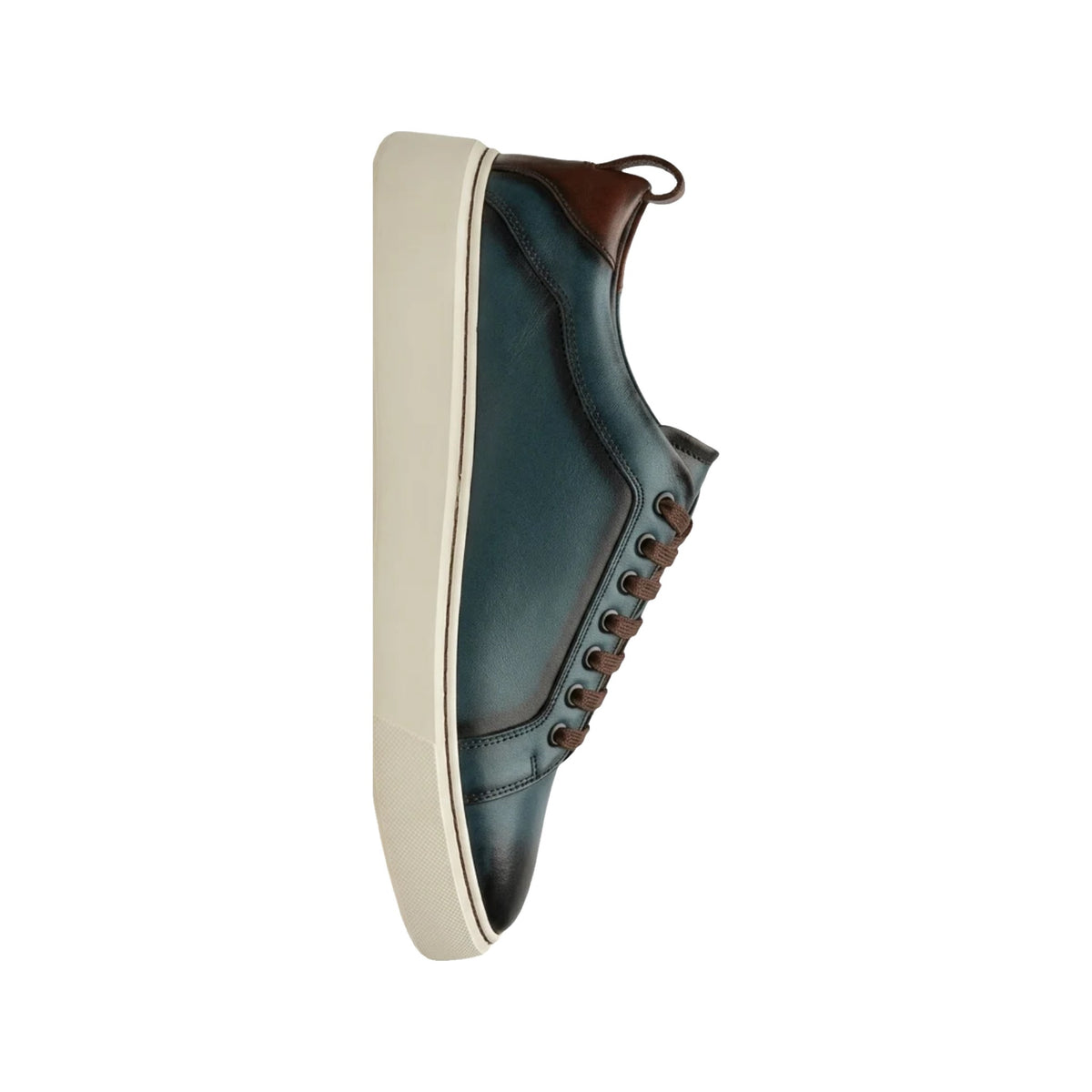
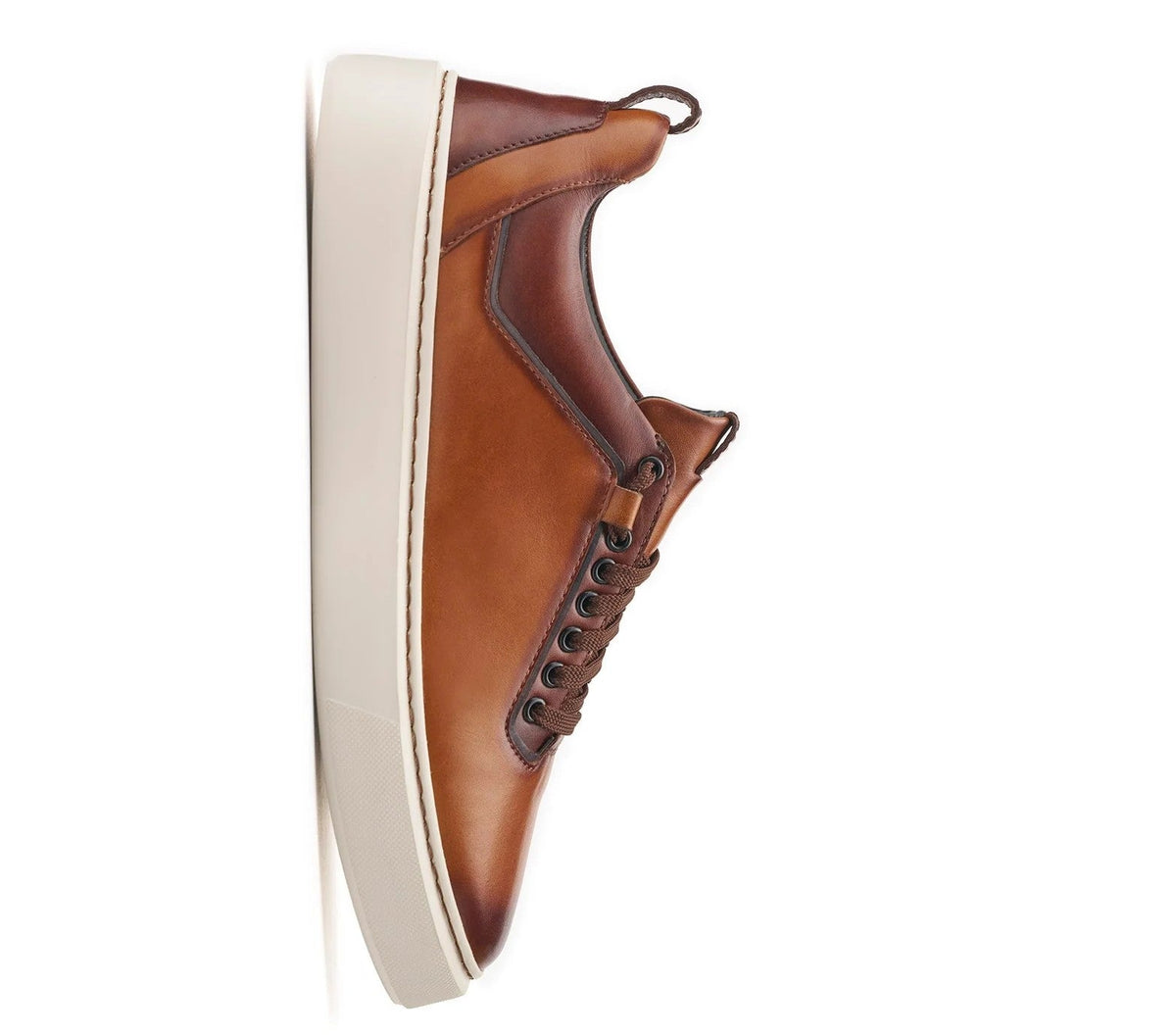
Other labels we stock use different materials. For instance, ZEESH uses Nappa leather on pairs like the ICON, and DMODOT lists the leather type and origin on its pages, such as "full-grain crust" for the Fresco brogue in tan. Always check the material section of the product page, because it differs from pair to pair.
How do you tell if a sneaker is really full-grain?
You can never be completely certain from a photo, but these clues help:
- Look at the surface. Real full-grain leather has small natural irregularities. A perfectly uniform, repeating "pebble" pattern can mean an embossed surface.
- Look at the edges. At a cut edge or inside the shoe, real leather shows fibrous layers. A synthetic shows a fabric base with a plastic film on top.
- Press and release. Real leather forms fine wrinkles when you press it, and they relax. Plastic tends to make larger, harder folds.
- Check the price. Full-grain leather costs more to produce. A very low price with the claim "full-grain" deserves a second look.
- Read what the brand says. Brands that use good leather usually name it. Vague words like "premium" or "genuine" alone are weaker signals.
For a deeper look at telling leather from synthetics, see our guide on PU vs real leather sneakers.
How should you care for a full-grain leather sneaker?
Keep it simple. Wipe off dust with a soft brush or a dry cloth, clean marks gently with a leather-safe cleaner, let wet shoes dry naturally away from direct heat, and store them with paper inside to hold the shape. Our product pages for the Unlabel pairs carry the same advice. The full routine is in our step-by-step guide on how to clean and care for leather sneakers.
Is full-grain leather right for Indian weather?
Generally yes, with sensible care. A breathable upper helps in humid heat, and leather that is allowed to dry naturally after rain tends to hold up well. The enemies are prolonged dampness, direct heat, and being packed away while wet. In monsoon, wipe your pair when you get home, stuff it with paper to hold its shape and absorb moisture, and let it dry in a shaded, airy spot. Do not put it near a heater or in direct midday sun, because heat can dry and crack leather.
What should you ask before buying a leather sneaker?
- Which grade is the upper? A named grade is a good sign.
- Is the lining leather too? A leather or sheep leather lining is usually more breathable than a synthetic one.
- How is the sole attached? A well-attached sole matters as much as the upper.
- What is the care advice? Honest brands tell you how to look after the pair.
- Does the price make sense? Compare with the materials, not the logo.
If you cannot find an answer on the product page, write to us at care@mission91.in and we will find out from the brand.
Read next: Unlabel Sneakers: Quiet Luxury in Full-Grain Leather and Best Leather Sneakers Under ₹7,000 in India. If you are shopping, browse our top picks.
Frequently asked questions
Is full-grain leather the same as genuine leather?
No. "Genuine leather" only means the material is real leather and can include lower grades. Full-grain is a specific, higher grade where the natural outer surface is kept.
Is full-grain leather better than suede?
They are different materials, not better or worse. Suede is made from the inner side of a hide and has a soft nap, while full-grain has a smooth outer surface. Suede needs more careful cleaning. See our guide to suede, nubuck and Nappa.
Will full-grain leather crease?
Yes. All leather creases where your foot bends. Full-grain tends to form soft, natural creases over time. You can reduce creasing with shoe shapers and by rotating your pairs.
Does full-grain leather need breaking in?
Usually a little. It can feel firm for the first few wears and then softens to your foot. If a pair hurts rather than just feels snug, check the size.
Is full-grain leather worth the extra cost?
If you wear your sneakers often and care for them, it is usually a sound choice because it ages well. If you want a trend piece for a few months, a cheaper material may be enough.
Browse leather sneakers from Indian makers
If you want to see these materials for yourself, explore our leather sneakers made in India or look at the Unlabel collection for quiet, full-grain pairs.
0 comments