

Short answer: When you buy leather sneakers for men in India, look for the type of leather named on the listing (full-grain or nappa, not just "genuine leather"), a leather or sheep leather lining, and a sole that suits Indian roads. Expect to pay roughly ₹4,000 to ₹9,000 for a pair that is built to last. Below is how to read a listing, and which Indian-made pairs we would start with.
Prices in this guide were checked on 23 October 2026 and can change with offers. Every pair mentioned is from the Mission 91 range, and the details come from each product page.

What should I look for in leather sneakers for men?
Five things matter more than anything else:
- The type of leather. The listing should say what it is: full-grain, nappa, suede, patent. Vague words tell you little.
- The lining. A leather or sheep leather lining feels better against the foot and handles sweat better than synthetic fabric.
- The insole. Memory foam, EVA or a cushioned footbed decide how the pair feels at hour six.
- The sole. Rubber and EVA soles grip well and stay light. A thin, hard sole can be tiring on long walks.
- The fit. Homegrown lasts can fit differently from global brands, so use the size guide on the product page.
What is the difference between full-grain, nappa, suede and patent leather?
Full-grain leather
This is the top layer of the hide with the natural surface left in place. It is strong and tends to develop character with wear. Unlabel's Rift, Stratus and Bastion use hand-painted full-grain leather in a Toledo finish, per the listings.
Nappa leather
Nappa is a soft, smooth finish. ZEESH uses it across the range. Cognac is described as smooth full-grain nappa, Nero is perforated nappa, and Bronacoda uses alligator-embossed nappa.
Suede
Suede has a soft, brushed surface. It looks warm and rich, and it needs care, because water and oil mark it easily. The Gully Number 003 Terai Green and Mrida Brown use suede leather uppers. Keep a suede brush and eraser handy.
Patent leather
Patent is glossy and coated, and it suits evenings. DMODOT's Lustro and Sportivo are patent styles. They wipe clean easily and show scuffs on the surface.
Is "genuine leather" good enough?
"Genuine leather" only tells you the shoe uses real leather. It does not tell you which layer or how it was finished. A listing that names the type, such as full-grain crust, nappa or suede, is giving you more to go on. We prefer to buy from brands that say what they use. For example, DMODOT's Fresco brogue lists full-grain crust leather, a sheep leather lining and a memory cushion insole.
We also look inside the pair. Our teardown videos on Instagram open up pairs from different brands to show the materials and build. They are a good way to see what the words on a listing mean in practice.
Which leather sneakers should I start with?
Here is a short list by budget, all from the leather sneakers made in India collection.
Under ₹5,000: ZEESH
- Nero, ₹3,800: perforated nappa leather in black, laceless slip-on, with a CloudFlex insole and a TPR rubber outsole.
- Cognac, ₹4,799: smooth nappa in cognac brown, fully leather-lined, with a high-cushion footbed.
- Icon, ₹4,999: a football-inspired sneaker in nappa leather with a mesh lining and PU arch support footbed.


Browse the full ZEESH collection for more colours and shapes.
₹5,000 to ₹7,000: DMODOT
- Fresco Brogue (tan), ₹5,399: full-grain crust leather with a brogue punch pattern on a sneaker cup sole.
- Grego (steel grey), ₹6,299: the same build in grey.
- Bosco, ₹6,999: full-grain crust in tan, a two-tone finish with a brown suede detail at the back and a white cup sole. The listing describes a padded insole.
- Pigro Nero, ₹6,299: black full-grain leather with a central zip, for people who dislike laces.
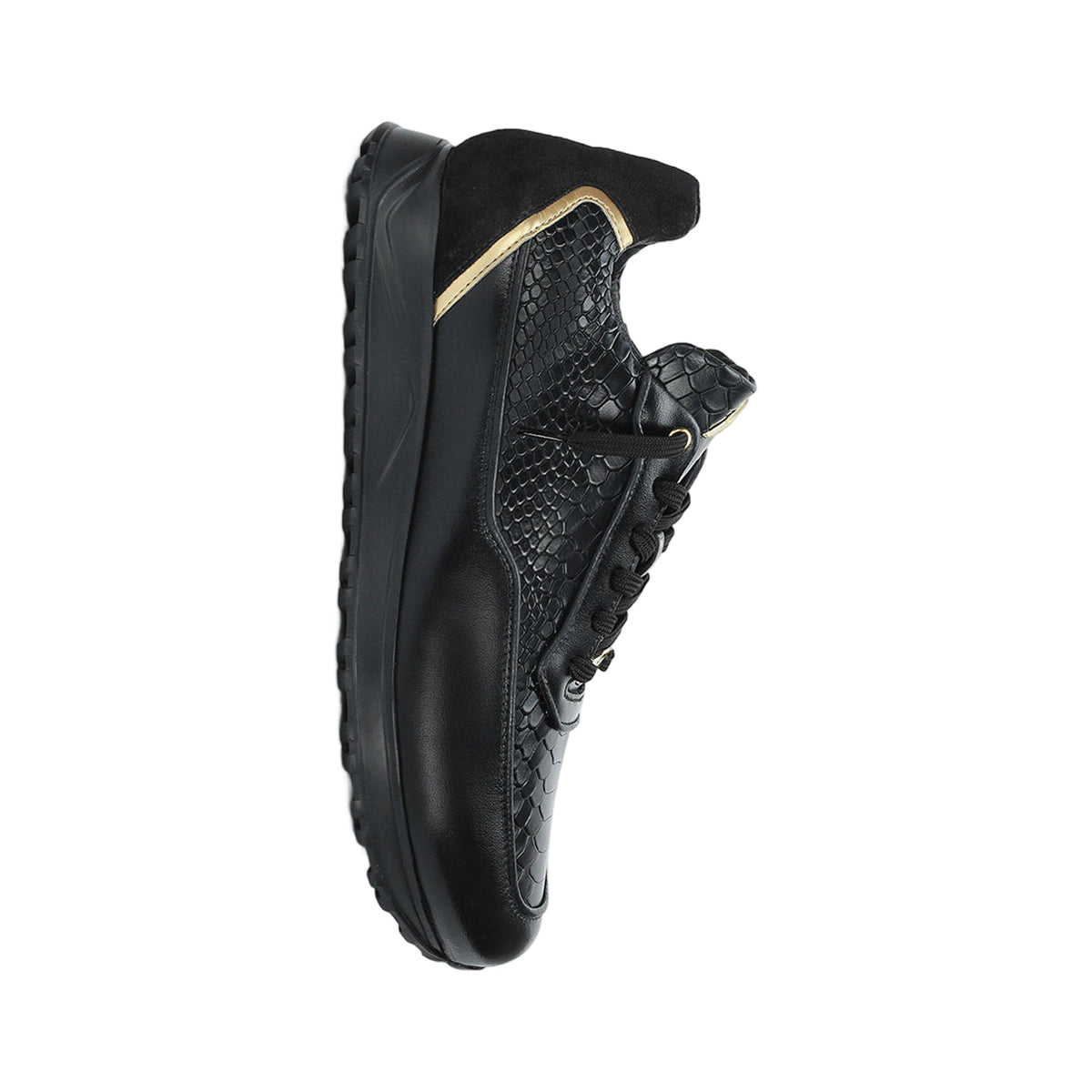
₹8,000 and above: Unlabel
The Unlabel collection is the most minimal in the range. Rift, Stratus and Bastion are ₹8,000 each, made with hand-painted full-grain leather, a sheep leather lining, a wide toe box and a lightweight EVA sole. Branding is kept subtle on purpose. The Cobalt Blue and Umber pairs at ₹8,999 use Argentinian full-grain leather with a Live Tech sole by SGM Soulifico, a sheep-lined stitching detail and no visible branding, per the listings.
Which colour should I buy first?
If this is your first leather pair, go neutral. White, tan and black cover most wardrobes. Tan, such as ZEESH Cognac, DMODOT Bosco or the Fresco brogue, works with jeans, chinos and kurtas, and it hides small scuffs better than white. Black suits dark denim and evening wear. White is the cleanest look, and also the one that needs the most care.
Once you own one neutral pair, add a second in a richer shade, such as a deep blue brogue like DMODOT's Cobalto or one of Unlabel's coloured options, for variety.
What mistakes should I avoid when buying leather sneakers?
- Buying on the photo alone. Read the material lines on the product page. If a listing does not tell you what the upper, lining and sole are, ask before you buy.
- Ignoring the size guide. Homegrown lasts can fit differently from global brands, and the guide is there for that reason.
- Wearing the same pair every day. Leather needs a day to dry out. Two pairs in rotation last longer than one pair worn daily.
- Cleaning suede like smooth leather. Use a dry brush and eraser, not water.
Are leather sneakers comfortable in the Indian heat?
Leather breathes better than most synthetics, but heat and humidity are real. Choose a leather or sheep leather lining, and perforations if the pair has them. ZEESH's Nero and Gully Labs' Dvaita and Naadu have perforated detailing described on the listings. Rotate between two pairs, so each gets a day to dry.
In monsoon, wipe off mud right away, keep suede dry and let pairs air-dry away from direct heat. Our guide to cleaning white sneakers covers basic technique for leather uppers.
How do I care for leather sneakers?
- Wipe with a soft brush or cloth after wearing.
- Air-dry naturally. Do not leave them near a heater or in direct sun.
- Store with paper inside to hold the shape.
- Use a dry suede kit for suede and a cleaning solution for smooth leather. Patch-test first.
SHOEGR, the Indian care brand we stock, sells brushes and kits for both, in the accessories collection.
FAQs
Which leather is best for sneakers?
Full-grain and nappa are both good choices. Full-grain is strong and ages well, and nappa is soft and smooth. Choose by how you will wear them and how much care you want to give.
How much should I spend on leather sneakers in India?
On Mission 91, leather pairs from ZEESH start at ₹3,800, most DMODOT pairs sit between ₹5,400 and ₹7,200, and Unlabel is ₹8,000 and up.
Are leather sneakers formal enough for office?
A clean, plain leather pair in black, tan or white works for smart-casual offices. DMODOT's brogue styles and Unlabel's minimal pairs are made for that.
Do leather sneakers stretch?
Leather softens with wear, but check the size guide before ordering. If you are between sizes, write to care@mission91.in and we will help you choose.
How do I clean leather sneakers?
Wipe with a soft brush or cloth, air-dry away from direct heat and store with paper inside. For suede, use a dry suede kit.
Find your pair: browse all leather sneakers made in India.
More leather pairs: browse DMODOT leather sneakers and brogue sneakers, and keep them clean with SHOEGR shoe care.
0 comments